Why Early Socialization Matters: What Puppy School Teaches Beyond Sit and Stay
Bringing home a new puppy is an exciting time. There is so much to enjoy, and there is also a lot of information to sort through. You want the best for your Puppy Pal, and it can be hard to know where to begin. At Airdrie Puppy Pals, we have spent many years supporting families during this stage. Early experiences play an important role, which is why we offer Puppy School and Puppy Class.
The Early Learning Window
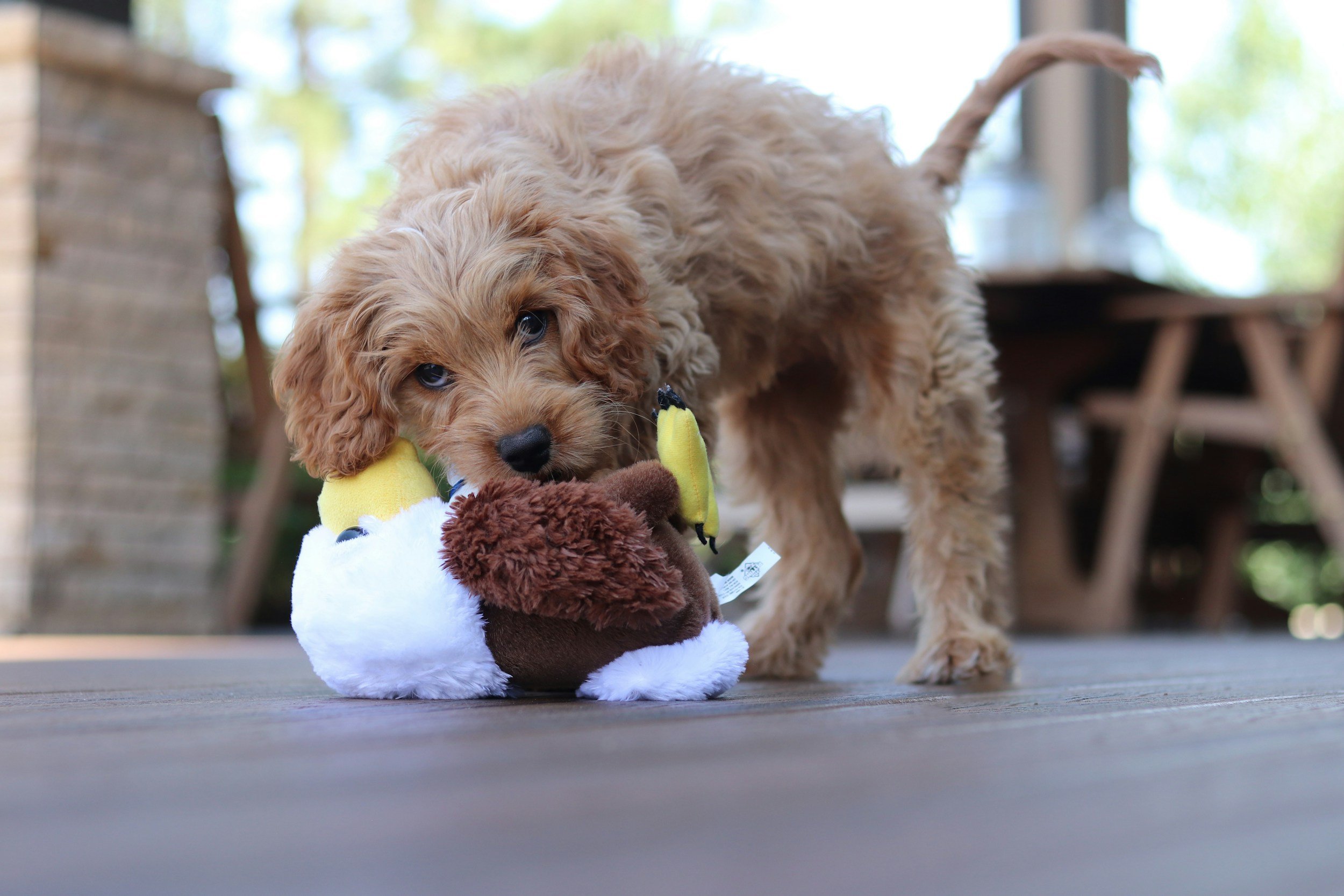
Many experts talk about a stage between 8 and 16 weeks when puppies are especially open to learning (1). During these weeks, puppies explore, listen, watch, and form early ideas about the world (2). Calm and positive moments during this time can help puppies grow into dogs who handle new places and new situations with more ease (3, 4, 5).
How Puppy School Supports Learning
Puppy School is for puppies between 8 and 16 weeks who have their first set of vaccinations. In a clean and controlled setting with puppies of a similar age, early socialization is designed to be safer than busy public areas. Places like dog parks have many unknown dogs and shared surfaces, which can make things feel less predictable for young puppies. Like all activities, there are always some risks, but many of these risks can be lowered in a space that is managed with care.
Our training room is cleaned before each group, and we check vaccination records before puppies join us. This creates a steady space for early learning during an important stage in your puppy’s development. We keep our groups small, usually 4 to 8 puppies, so each Puppy Pal has room to relax and learn. Classes include supervised play, simple manners, and small agility style games. These activities help puppies explore new things in a supported way.
Why Positive Experiences Matter
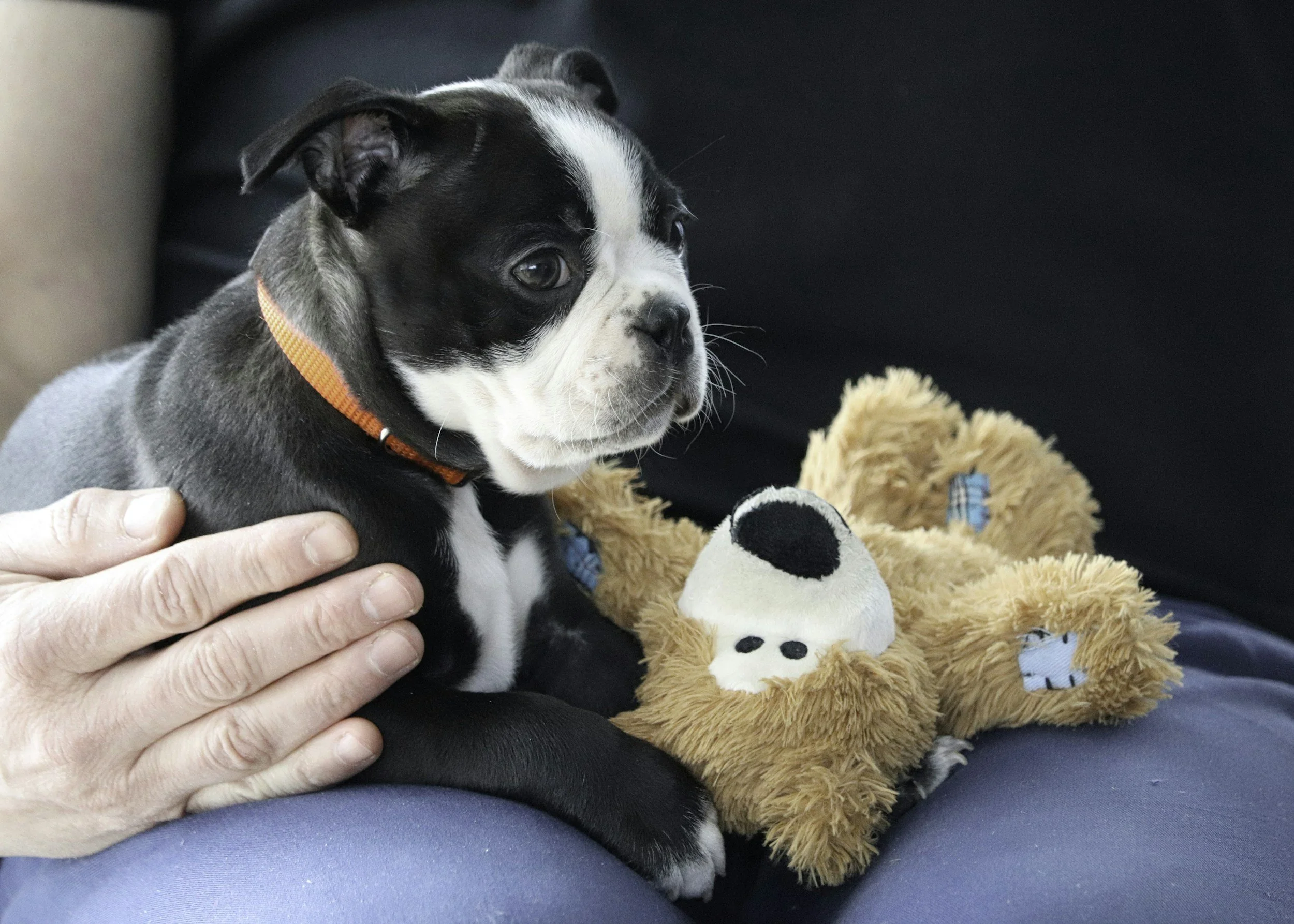
The first few months of a puppy’s life are full of learning. This is when puppies start to notice how people move, how other dogs communicate, and what everyday life feels like. Research also shows that puppies often find it easier to meet new people and explore new places before they reach about 14 weeks of age (1, 2, 3). When these early moments are gentle and well supported, many puppies grow into dogs who feel more at ease in new situations later on.
In our classes, puppies explore simple sights and sounds, meet caring people, and practice early skills in a steady and supported way. These small experiences add up and can make day to day life easier for families as their Puppy Pal grows.
Guided by Experience
At Airdrie Puppy Pals, our programs are shaped with guidance from Nikki, who is a CDBC and a CBCC KA. Nikki has spent many years helping puppies learn during this important stage. We see how early learning helps puppies adjust to new routines, meet new dogs, and enjoy life with their families.
When you join Puppy School or Puppy Class, you are choosing a place where your Puppy Pal can learn in a calm and supportive way. We are always happy to answer questions and help you choose the class that fits your puppy’s needs.
Sources
Freedman, D. G., King, J. A., and Elliot, O. Socialization and the Behavior of Dogs. Scientific American, 1961.
Scott, J. P., and Fuller, J. L. Genetics and the Social Behavior of the Dog. University of Chicago Press, 1965.
Appleby, D. L., Bradshaw, J. W., and Casey, R. A. Relationship Between Socialization Practices and Behavior of Dogs in U K Rescue Shelters. Journal of Applied Animal Welfare Science, 2002.
Howell, T. J., King, T., and Bennett, P. C. Puppy Socialization Practices and Experiences. Journal of Veterinary Behavior, 2015.
Salman, M. D. et al. Behavioral Reasons for Relinquishment of Dogs to Shelters. Journal of Applied Animal Welfare Science, 2000.
Batt, L. S., Batt, M. S., Baguley, J. A., and McGreevy, P. D. Factors Associated with Success in Guide Dog Training. Journal of Veterinary Behavior, 2008.
Gazzano, A., Mariti, C., Notari, L., Sighieri, C., and McBride, E. A. Effects of Early Gentling and Early Environment on Emotional Development of Puppies. Applied Animal Behaviour Science, 2008.
Dietz, L., Arnold, A. K., Goerlich Jansson, V. C., and Vinke, C. M. The Importance of Early Life Experiences for the Development of Behavioural Disorders in Domestic Dogs. Behaviour, 2018.